
Tour of Spiesheim's Historyde de

Family Estate Erbes


ortsrundgang15 hofgut erbes 1


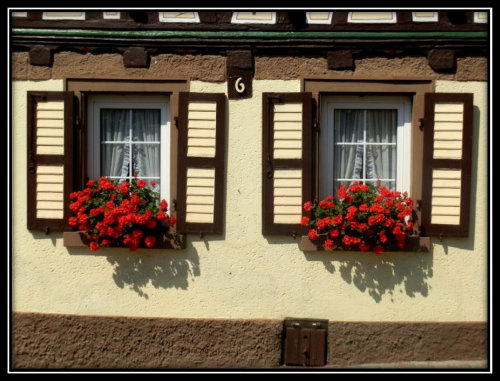
The original order of the house corresponds to a typical Frankonian farmyard. Living space, stables, barn, wine press house, yard and gate form a closed unit. The dimensions have never been changed, even more, the original structure of the living space has been preserved.

There have repeatedly been wars and sieges in our region forcing people to build their houses in a way that gave shelter, like this farmyard, and led among others, to the so-called "scattered village". Spiesheim represents a good example for this kind of settlement.

Presumably, the whole farmyard was built by Michael Diefendäler around 1680. In 1681, teacher Adolf Diehl listed 45 houses with 215 inhabitants, 43 of which were men, 44 women, 53 boys and 75 girls. On average, a working couple had 5-6 children. Apart from the farmers, there lived 2 innkeepers, 1 blacksmith, 1 tailor, 1 cooper, 1 bricklayer and 1 linen weaver as well as a farm worker and a maid in the village. At that time, Spiesheim still suffered considerably from the consequences of the Thirty Years' War (1618-1648).

Around 1720, Johannes Steyl is mentioned as owner. In 1900, the current owner's great-grandfather Georg Jung (1870-1920) bought the estate from a widow Steil. Georg Jung and his wife Margarethe, born Mühl (1860-1939) ran a farm and did some wine-growing. The existing buildings were thoroughly renovated and new extensions were built.


ortsrundgang15 hofgut erbes 2


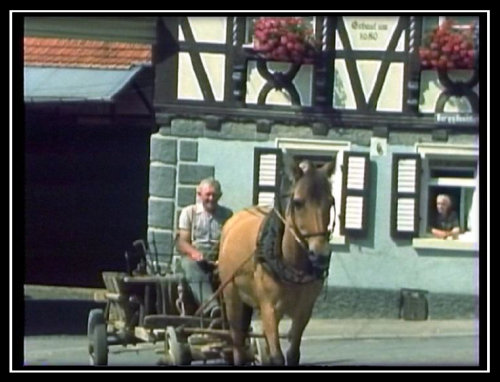
Many years, Georg Jung also transported the milk of the village to the station in Wörrstadt by horse cart. His son August (1902-1994) ran the farm alone from 1920 to 1922 and from 1923 on together with his wife Eliese Jung, born Jacobs (1898-1982) as mixed agricultural and wine-growing farm, completed by the then usual livestock. August Jung was well-known especially for the breeding of and caring for horses.


ortsrundgang15 hofgut erbes 3In 1976: August Jung with plough cart and wife Eliese at the window


Friederike Erbes, only child of August and Eliese Jung, was born in this house in 1927. She has lived here for her whole life. From 1949 on, she continued the work of her parents together with her husband Alfred Erbes (1926-1980), concentrating more and more on the wine-growing part of the farm. Alfred Erbes was committed to the community of Spiesheim and the peasantry in many ways.

The current owner Heribert Erbes, born as son of Friederike and Alfred Erbes in 1951, and his wife Sibylle, born Deyle in 1953, solely orientated on viniculture with direct marketing from 1980 on. The products of the Estate were honoured at a national and international level. Heribert Erbes was decorated for his various voluntary activities with many honours, e. g. the Cross of the Order of Merit of the Federal Republic of Germany, the Theodor Heuss Gold Medal and the Medal of Honour of Rhineland-Palatinate.


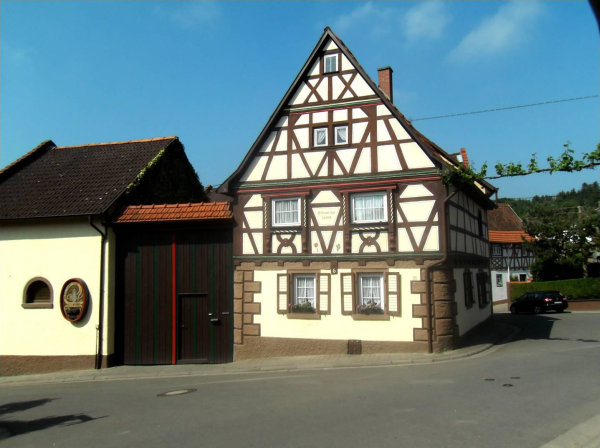
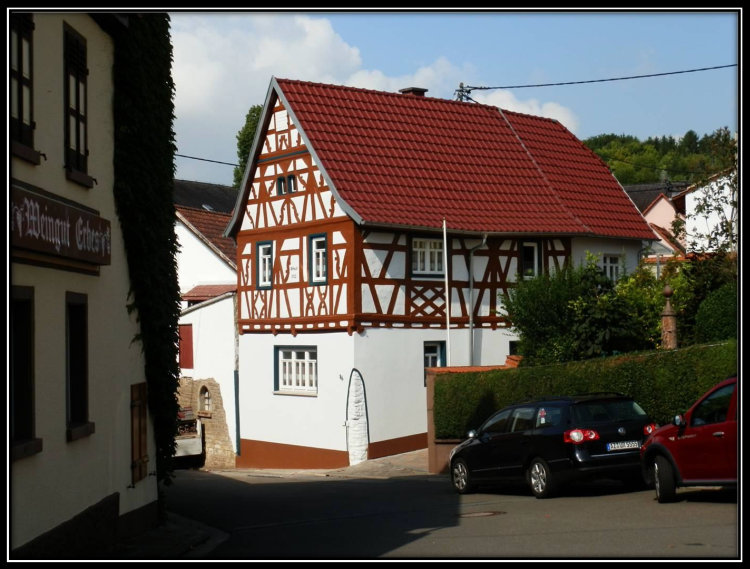
ortsrundgang15 hofgut erbes 4Family Estate Erbes in 2016


Since 2011, the well-restored Estate has been classified worth protecting and can be found anew in the media every year due to its exposed position at a corner in the old part of the village, visible from North and East and situated directly at the Way of St. James. Among other things, the inner yard was described as a "jewel" by the media. In 1983, the house won the facade competition of the administrative district Alzey-Worms.

Various publications praised the Estate e. g. as the most beautiful house of Spiesheim.

Sitting in the little wine tavern adapted to the architectural style of the house, maybe with a glass of tasty wine, makes you feel being taken back to earlier times. The room is all the more interesting for some exposed stones. The cast of a shell is clearly visible on one of them, which authentically proves the maritime origin of the site (once Basin of Mainz, Tertiary period).


Text L 15: Heribert Erbes - October 2016
Translation: Hildegard Wingert
Pictures: Erich Dexheimer / Fam. Erbes

Tour of Spiesheim's Historyde de

At "Middle Creek"


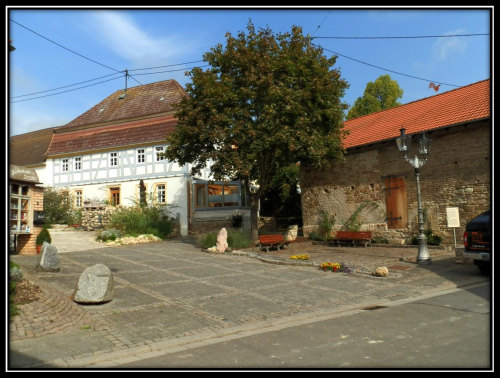
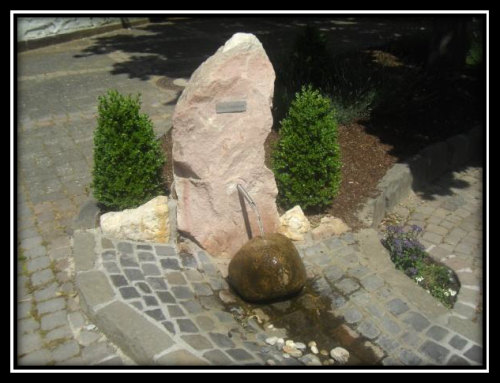
ortsrundgang14 mittelbach 2At "Middle Creek" in 2016


In the past, this common place surrounded by some farmyards in the middle of the village served as trough for the farmers' cattle. In case of a fire the trough ("Weth" or "Weed") functioned as fire-fighting pond.

"Middle Creek" was filled with water coming from the spring of the "Oberbrünnchen" and the surplus of the "Oberbrunnen", a well in the upper village. The water continued its way in an open ditch until it reached the "Säubach" in the lower village. It was the duty of the inhabitants of Spiesheim to keep this ditch open and clean.

After the construction of the plumbing in 1906 and the later following sewerage system the "Creek" was drained and the trough was filled up.


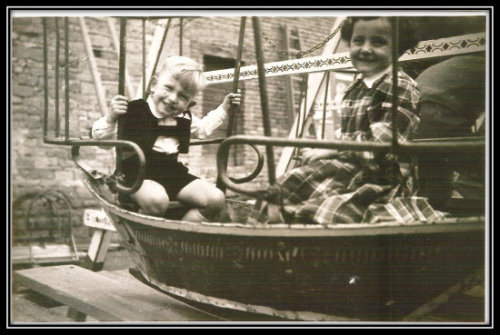
ortsrundgang14 mittelbach 3On the swing boat in 1953 - Heribert Erbes and Marlies Schmitt
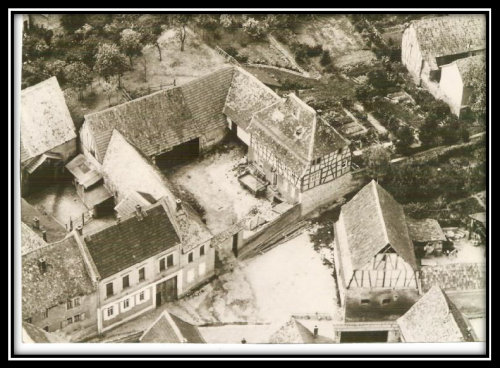
 

So Spiesheim gained a place at the "Middle Creek" where a merry-go-round or a swing boat fascinated children and where delicious sweets were offered at the annual fair until the 1950s.

Many years, this place was in a desolate state and often used as parking space for agricultural vehicles and, later, for cars etc.


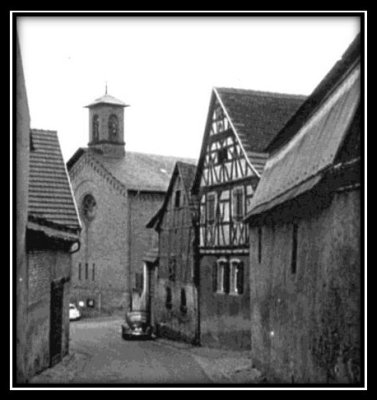
ortsrundgang14 mittelbach 4Ca. 1960: Grange Langguth at "Middle Creek" (foreground right)
 

ortsrundgang14 mittelbach 5


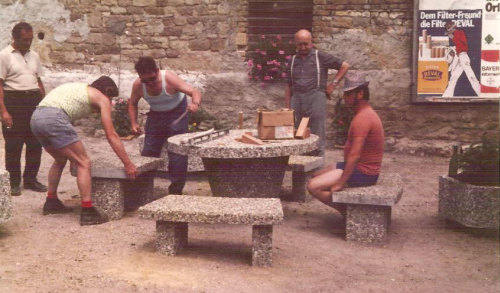
In 1978, the then local council members remodeled this place for the first time on the occasion of the construction of the sewerage system and the road works. According to the financial situation and the spirit of those times, a table with fitting benches and flower tubs made of exposed aggregate concrete were positioned on the place.


ortsrundgang14 mittelbach 6


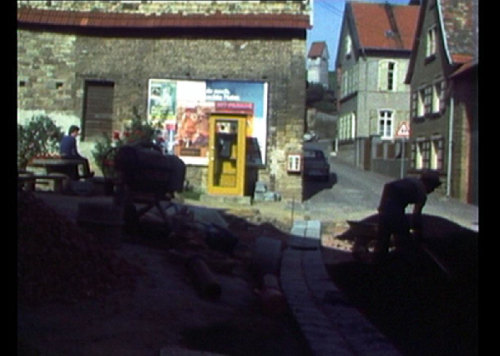
The "immense" size of the display board and advertising space conspiciously positioned on the right of the barn of former owner late Gottlieb Hofmann dominated the place. A yellow public phone booth stood in front of it many years until it was replaced by a "modern" open purple-coloured version at the "Old Schoolhouse". The rising importance of mobile phones in the 90s led to a decrease in the use of the public phone which finally was removed.

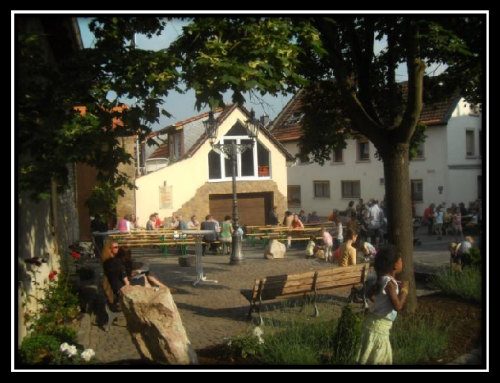
ortsrundgang14 mittelbach 7  ortsrundgang14 mittelbach 8Inauguration newly-designed "Middle Creek" in 2011
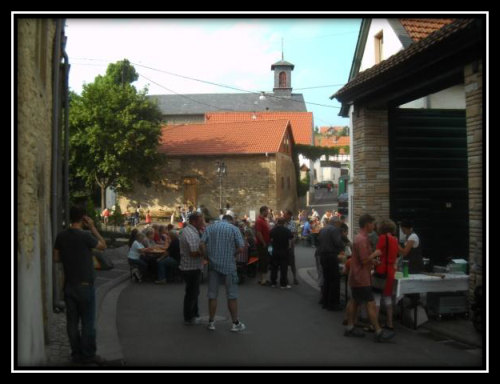
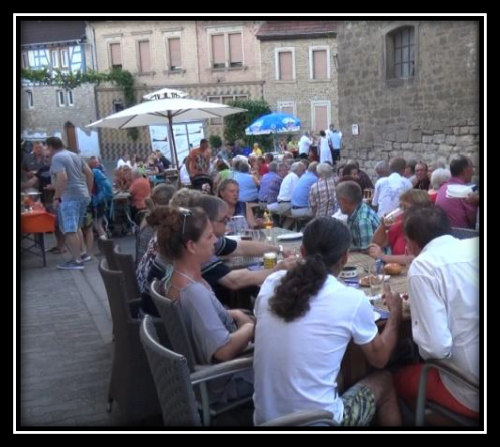
 

In 2011, the place was elaborately redesigned again, this time by the 1964 age-group of Spiesheim. Their intention was to recall the original function of "Middle Creek" as trough with a small water course and flowers at its "banks".


ortsrundgang14 mittelbach 9

ortsrundgang14 mittelbach 10


Occasional public events and, since 2015, the "Mittelbachfest" (street party) have put life into this place.

Originally placed in Mainz, the street lamp positioned at this place once ran on gas. Since it was installed here, it has run on electricity and has brightened "Middle Creek" with a warm and pleasant light.
In the 1980s, Jockel Fuchs, then Mayor of Mainz, donated the nostalgic candelabra to our former mayor and freeman August Ohl.


Text L14: Sigmund Jung / Erich Dexheimer - October 2016
Translation: Hildegard Wingert
Pictures: Erich Dexheimer / Marlies Heck / Rüdiger Steil


Historischer Ortsrundgang Spiesheimen gb

An der Mittelbach


ortsrundgang14 mittelbach 2An der Mittelbach 2016


Hier, im mittleren Dorfbereich, zwischen einigen Bauernhöfen gelegen, war früher eine "gemeine Weth" (Weed), die das Vieh der Bauern mit Wasser versorgte. Im Falle eines Brandes konnte das Wasser aus dem Teich (Weed) zum Löschen des Feuers genutzt werden.

Gespeist wurde die Weed durch die Quelle des Ober-brünnchens und das überschüssige Wasser vom Oberbrunnen, das hierher zur „Mittelbach“ geleitet und anschließend in einem offenen Graben weiter bis zur "Säubach" im unteren Dorfbereich floss. Die Einwohner waren verpflichtet, den Graben offen zu halten.

Nach dem Bau der Wasserleitung 1906 und der nachfolgenden Kanalisation wurde die "Bach" in Drainagen abgeleitet und die Weed zugeschüttet.


ortsrundgang14 mittelbach 3Auf der Schiffschaukel 1953 – Heribert Erbes & Marlies Schmitt


So entstand der Platz "an der Mittelbach", auf dem bis in die 1950er Jahre an Spiesheimer Kerb das Karussell ("Reitschul") oder die Schiffschaukel die Kinder begeisterte und am "Zuckerstand" süße Leckereien für jeden Geschmack angeboten wurden.

Lange Jahre war der Platz in ungepflegtem Zustand und diente häufig als Abstellplatz für landwirtschaftliche Fahrzeuge und später als Parkplatz für Autos etc.


ortsrundgang14 mittelbach 4Mittelbach (rechts vorn) ca.1960 mit Gelände Langguth


ortsrundgang14 mittelbach 5


1978 wurde die Mittelbach von den damaligen Gemeinderatsmitgliedern im Zuge der Kanalisation und Ausbau der Straßen erstmals umgestaltet - den finanziellen Mitteln und dem Zeitgeist entsprechend - mit einem Tisch, den dazu passenden Bänken und Blumenkübeln aus Waschbeton.


ortsrundgang14 mittelbach 6


Unübersehbar auf der rechten Seite war die "riesige" Anzeigentafel und Werbefläche an der damaligen Scheune von Gottlieb Hofmann. Davor stand lange Jahre ein gelber öffentlicher Münzfernsprecher, bis dieser durch eine moderne offene lila Version der Telecom an der alten Schule ersetzt wurde. Mit dem Einzug des Handys in den 90er Jahren wurde der öffentliche Münzfernsprecher kaum noch genutzt und schließlich abgebaut.


ortsrundgang14 mittelbach 7  ortsrundgang14 mittelbach 8Einweihung neugestaltete Mittelbach 2011


Die aufwendige Umgestaltung des Platzes 2011, durch den Kerbejahrgang 1964, mit dem kleinen Bachlauf und dem umgebenden Grün soll an die ursprüngliche Bedeutung der Mittelbach erinnern.


ortsrundgang14 mittelbach 9

ortsrundgang14 mittelbach 10


In den folgenden Jahren wurde der Bereich immer wieder durch gelegentliche dörfliche Veranstaltungen und seit 2015 durch das Mittelbachfest belebt.

Die Original-Laterne (Kandelaber) im vorderen Bereich des Platzes stand ursprünglich in Mainz und wurde früher mit Gas betrieben. Heute beleuchtet der Kandelaber die Mittelbach mit einem angenehmen Licht.
In den 1980er Jahren wurde er als Geschenk des Mainzer Oberbürgermeisters Jockel Fuchs an August Ohl, dem damaligen Bürgermeister und Ehrenbürger von Spiesheim, übergeben.


Text L14: Sigmund Jung / Erich Dexheimer - Oktober 2016
Bilder: Erich Dexheimer / Marlies Heck / Rüdiger Steil


Tour of Spiesheim's Historyde de

Birthplace of Johann Nöth

The last Cartwright of Spiesheim (1880-1963)


ortsrundgang12 wagnerei noeth 2    ortsrundgang12 wagnerei noeth 3


"Wagner (Cartwright) Johann" or, in dialect "Woaner-Joe", to distinguish him from other people named "Johann" by mentioning his job, lived with his family in this house where he also worked as a cartwright about 50 years, from the beginning of the 20th century until 1952.

In Germany, making carts goes back to the 14th century. It can be proved that from 1681 on there always worked cartwrights in Spiesheim who mainly supplied the farmers.

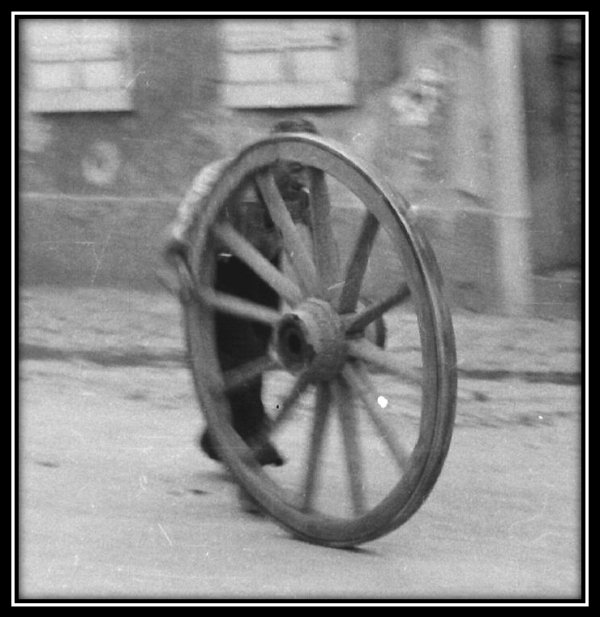
Above all, Johann Nöth made wooden cartwheels which then were coated with iron by the blacksmith. In those days, cartwheels were needed for all vehicles from cart to coach.

ortsrundgang12 wagnerei noeth 4Adolf Knodt with cartwheel in 1958

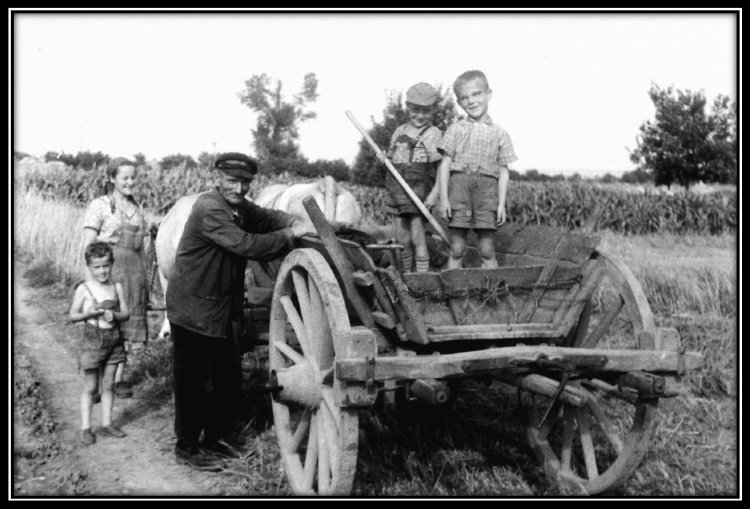
 ortsrundgang12 wagnerei noeth 5Oxcart with "Kronewert Fritz" in 1962
(Friedrich "Fritz"Diefenthäler, Cecilia, Holger, Donald und Gilbert)


ortsrundgang12 wagnerei noeth 6

Apart from cartwheels, Johann Nöth made a wide range of wooden tools, from handles for rakes, broomsticks to plough carts and gates.

By mending broken tools etc. he raised the hard-earned modest family income and was supported by his wife Gertrud, his daughter and his three sons who helped him with easier works to make their contribution to the family's earnings, too.

During the last years of Johann Nöth working as a cartwright, Ernst Stübiger supported him in a very helpful and friendly way. Ernst Stübiger, a skilled cartwright, too, had been expelled from Sudetenland (part of former Czechoslovakia) after World War II and had settled in Spiesheim.

With Johann Nöth as the last cartwright in Spiesheim this trade died in our village.

The current owners of this place, the couple Hildegard Wingert and Jürgen Leininger, acquired the meanwhile protected half-timbered house typical of Spiesheim from the descendants of Johann Nöth in 1989. They restored the whole estate with love and passion. Today it presents another jewel of our community.


ortsrundgang12 wagnerei noeth 7


Text 12: Heribert Erbes
Translation: Hildegard Wingert
Pictures: Erich Dexheimer / Ebermayer /Sieglinde Schäffer
October 2016


Letzte Änderungen
Nächste Termine
Fr, 24 Apr. 2026 19:00 Uhr
Jahreshauptversammlung der SG 1926
Mi, 06 Mai 2026 19:11 Uhr
Kartenvorverkauf SCV närrische Weinprobe
Sa, 09 Mai 2026 00:00 Uhr
Frühjahrsfest im Kinderkarten
So, 10 Mai 2026 00:00 Uhr
Vorstellung der Konfirmanden Spiesheim
Do, 14 Mai 2026 00:00 Uhr
Tag der offenen Tür Feuerwehr
So, 24 Mai 2026 00:00 Uhr
180 Jahre Ev. Kirche Gottesdienst
Sa, 30 Mai 2026 00:00 Uhr
Närrische Weinprobe

Off Canvas Menu